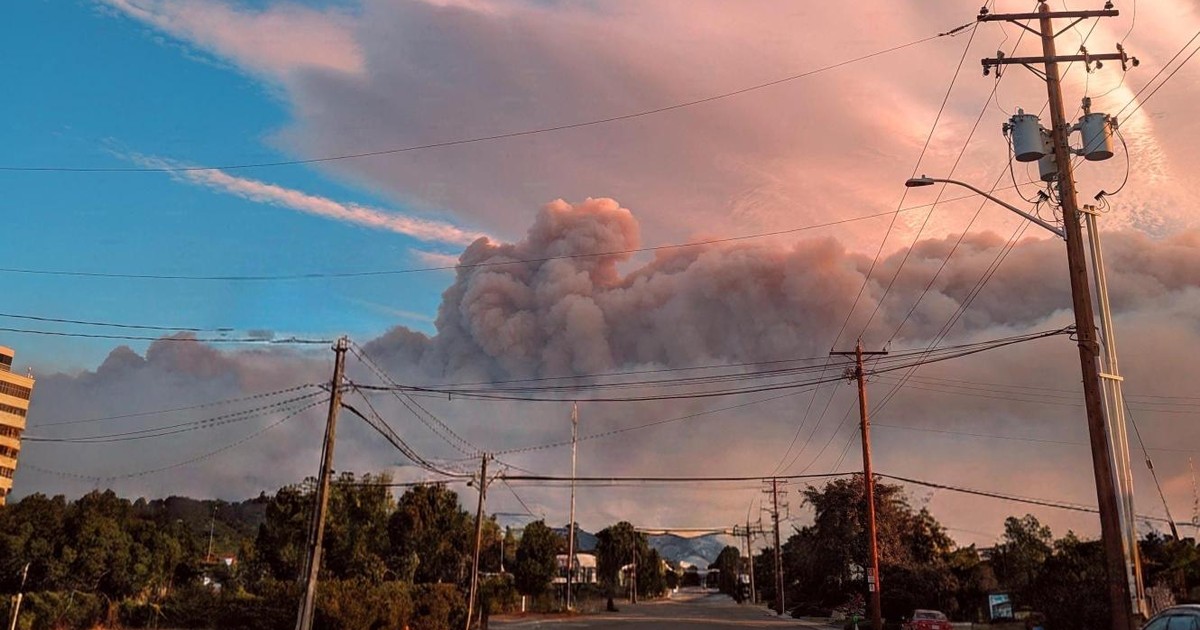
If the summer of 2026 taught Alberta business owners anything, it is that you do not need a fire at your door to feel a wildfire. On July 20, Environment Canada warned that Edmonton's Air Quality Health Index would hit 10 or higher, the very high risk level, with a smoke advisory covering all of Alberta north of Red Deer. The smoke was pouring in from more than 200 wildfires burning across the Northwest Territories. Nationally, Canada had already seen more than 3,000 wildfires and roughly 1.4 million hectares burned by early July. For a lot of Alberta businesses, the fire was hundreds of kilometers away and it still cost them.
The impact shows up in two ways. If you run a storefront, a restaurant, a gym, or any place customers come to, heavy smoke days keep people home. Foot traffic drops, patios close, and revenue for that week takes a hit you never planned for. If you run outdoor trades, roofing, landscaping, concrete, or road work, an air quality warning can shut the crew down for safety, and the work does not happen while the clock and the payroll keep running. Same smoke, two different ways to lose money.
Here is the part that catches owners off guard, so I want to be straight about it. Lost business from smoke, on its own, is usually not covered. Most commercial policies pay for business interruption when there is physical damage to your property from a covered event, a fire, a storm, that kind of thing. Bad air and a quiet week are a real loss to your bottom line, but with no physical damage to your premises, standard business interruption does not respond. It is one of the widest gaps between what owners assume and how the coverage actually works.
So what about when the government steps in? This is the question I get, and it is a good one. Say an area is closed by civil authority, ordered shut because of wildfire or flood risk, and your fixed location is inside that zone. Does business interruption kick in then? Sometimes, through an extension called Civil Authority coverage. It is designed for exactly this, to pay lost income when an official order prohibits access to your premises even though your own building was not damaged. But read the fine print, because on most policies that order must be tied to actual physical damage to a neighboring property, not just a precaution, and it comes with a waiting period and a cap on how many days it will pay. A purely precautionary evacuation, or a closure over smoke and air quality alone with no physical damage, likely will not trigger it. This is where the exact wording of your policy decides everything.
There is coverage that can help, and it is worth knowing what you actually carry. Physical smoke or soot damage to your stock, contents, or equipment is often covered, so documenting your inventory matters. And if a key supplier or a major customer is knocked out by fire and that stops your operation, a coverage called Contingent Business Interruption can sometimes respond, if you have it. The theme here is simple. These are add-ons and extensions with specific triggers, not automatic guarantees, and most owners have never checked which ones are on their policy.
Alberta's smoke season is not going away, so the useful move is to know before the next bad stretch exactly what your policy does and does not cover, and whether Civil Authority or Contingent Business Interruption belong on it. That is a quick conversation, and a much better time to have it than in the middle of an orange sky.
Mandy Stierman, Founder and Principal Broker